About Vacumm Dessicator
Vacuum Desiccator
A
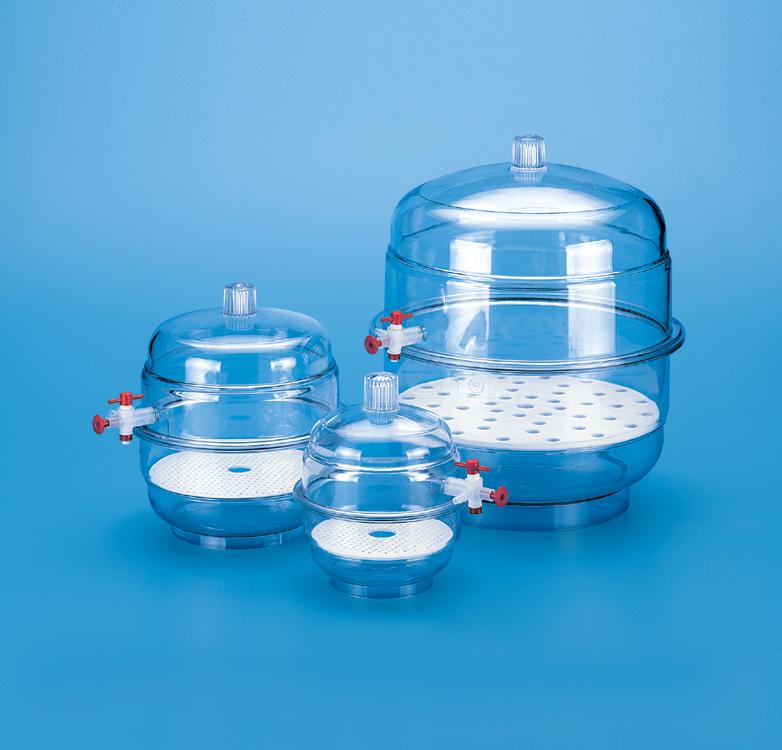
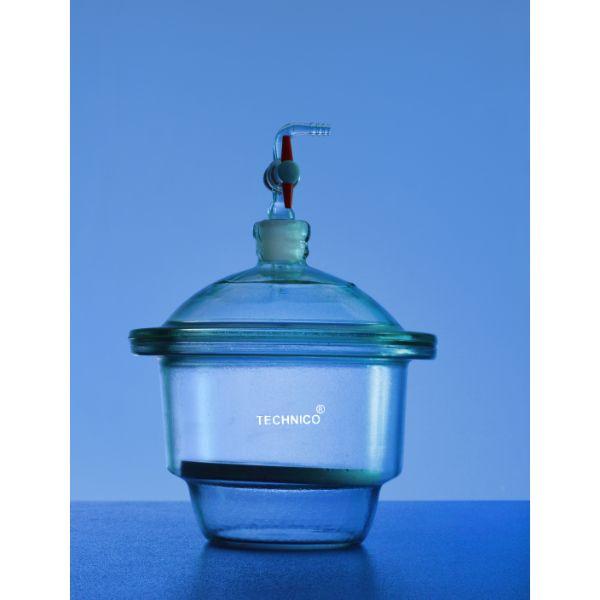
Vacuum Desiccator is a laboratory apparatus used to remove moisture from samples and store moisture-sensitive materials under low-pressure (vacuum) conditions.
It works by:
- Creating a vacuum inside a sealed chamber
- Using a desiccant to absorb moisture
Vacuum desiccators are widely used in:
- Pharmaceutical industries
- Material science research
- Electronics and nanotechnology laboratories
The vacuum desiccator excels in preserving sensitive samples by preventing humidity exposure. The airtight dome lid, combined with a reliable vacuum valve and chemical-resistant materials, ensures controlled, contamination-free storage. Its manual operation requires no electricity, making it suitable for laboratories seeking dependable, energy-efficient solutions.
User-Friendly and Versatile DesignEngineered with clear visibility and lightweight components, this vacuum desiccator allows for easy monitoring and handling. The removable porcelain base plate and smooth surfaces simplify cleaning. Compatible with a wide variety of desiccants, it meets the needs of different laboratory procedures, including sample drying and chemical storage.
FAQ's of Vacumm Dessicator:
Q: How does the vacuum desiccator maintain dryness and prevent contamination?
A: This desiccator provides an airtight seal using silicone or neoprene rubber O-rings and a high-quality vacuum valve. The internal vacuum effectively removes moisture, and the use of compatible laboratory desiccants ensures optimal dry storage. The clear dome lid allows easy sample observation without breaking the seal.
Q: What is the maximum vacuum pressure this desiccator can withstand?
A: The vacuum desiccator is rated for a maximum vacuum pressure of approximately -740 mmHg, making it suitable for most laboratory drying and storage applications.
Q: How can the vacuum desiccator be cleaned and maintained?
A: It features a design with removable components and smooth surfaces, making it straightforward to disassemble and clean thoroughly. The borosilicate glass, polypropylene, and porcelain materials are chemically resistant and autoclavable for high-level decontamination.
Q: When should I use a vacuum desiccator over a standard desiccator?
A: A vacuum desiccator is preferred when storing highly moisture-sensitive materials or when faster and more efficient drying is required. Its use of vacuum pressure accelerates moisture removal compared to non-vacuum models.
Q: What types of chemicals can the desiccator safely store?
A: Made from borosilicate glass, polypropylene, and PTFE, this desiccator is resistant to acids, alkalis, and solvents, allowing it to safely house a broad range of chemical samples.
Q: Where is this vacuum desiccator typically used?
A: It is primarily employed in laboratory environments, including research, clinical, pharmaceutical, and educational settings, wherever moisture-sensitive materials require controlled drying and storage.
 Send Inquiry



 Send Inquiry

 Send Inquiry
 English
 Spanish
 French
 German
 Italian
 Chinese (Simplified)
 Japanese
 Korean
 Arabic
 Portuguese