About Aluminium foil / Metal foil
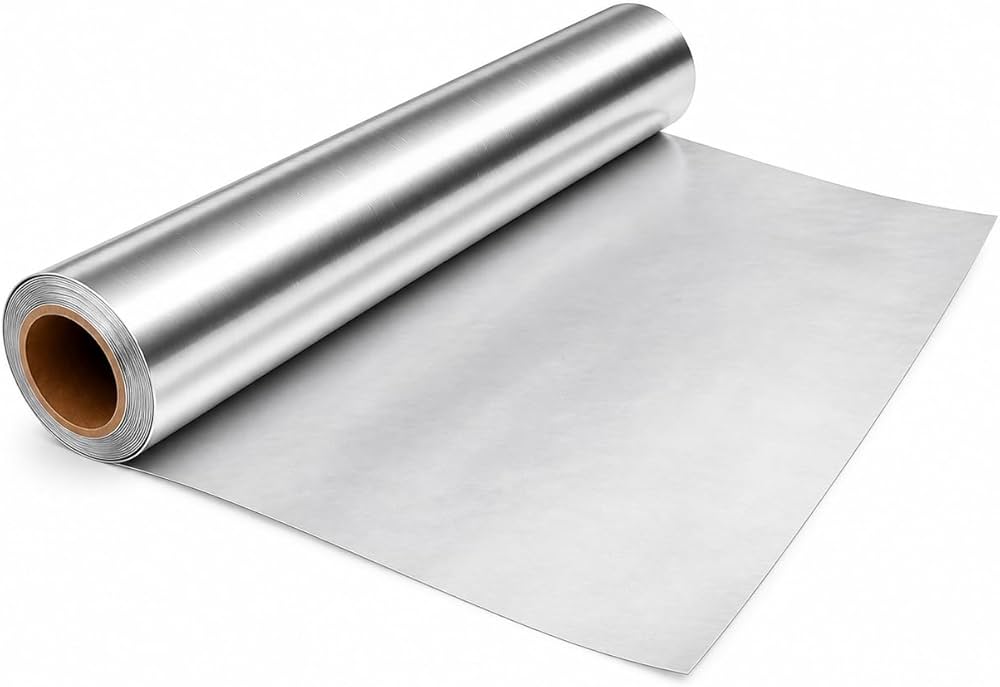
Aluminium foil is a thin, flexible sheet made from aluminium metal, widely used for packaging, cooking, insulation, electrical applications, and laboratory purposes. It is produced by rolling aluminium into very thin layers, typically less than 0.2 mm thick.
Versatile Applications Across IndustriesAluminium foil is essential in packaging, insulation, electromagnetic shielding, and various household, industrial, and pharmaceutical uses. Its flexibility and excellent conductivity make it ideal for food wrapping, cable protection, and electronic components. Whether you need high tensile strength or maximum elongation, our foils adapt to your technical requirements, making them perfect in both industrial settings and everyday environments.
Reliable Quality and Safety StandardsProduced with alloys such as 1100, 3003, and 8011, our foils guarantee non-toxic, food-safe performance. Each roll is manufactured under established standards like ASTM B479 and IS 737, ensuring reliability and safety in every application. With purity above 99.0% and the option for standard export packing, our aluminium foil safeguards your product and processes efficiently.
FAQ's of Aluminium foil / Metal foil:
Q: How can aluminium foil be used in industrial and household applications?
A: Aluminium foil is widely used for wrapping, sealing, insulation, lining, and protection. In industrial settings, it is utilized for electromagnetic shielding, cable wrapping, and insulation, while in households, it is ideal for food storage, cooking, and packaging.
Q: What are the benefits of choosing this aluminium foil for packaging purposes?
A: The foil's high purity, excellent conductivity, and non-toxic nature ensure it protects food and sensitive products from moisture, air, and contaminants, while its malleability allows for secure sealing and wrapping, extending shelf life and freshness.
Q: What is the recommended process for handling and storing aluminium foil?
A: To ensure longevity, aluminium foil should be stored in a cool, dry place away from moisture. It must be kept in its original packing-such as wooden cases or cartons-to prevent contamination and physical damage.
Q: Where is this foil typically manufactured and exported from?
A: Our aluminium foil is produced by certified manufacturers, suppliers, and traders adhering to international standards, and is commonly exported globally in standard packing for various applications.
Q: How does the thickness and temper affect the foil's performance?
A: Thinner foils are generally used for household and light packaging, while thicker foils cater to industrial and insulation requirements. Temper (soft, hard H18, etc.) influences flexibility, strength, and resistance to tearing.
Q: When should I opt for embossed or coated aluminium foil instead of plain?
A: Embossed or coated foils offer added tactile grip, enhanced heat resistance, or corrosion resistance, making them particularly suitable for demanding packaging, insulation, or electronic shielding scenarios.
 Send Inquiry



 Send Inquiry

 Send Inquiry
 English
 Spanish
 French
 German
 Italian
 Chinese (Simplified)
 Japanese
 Korean
 Arabic
 Portuguese