About Squidstat Plus Potentiostat
-
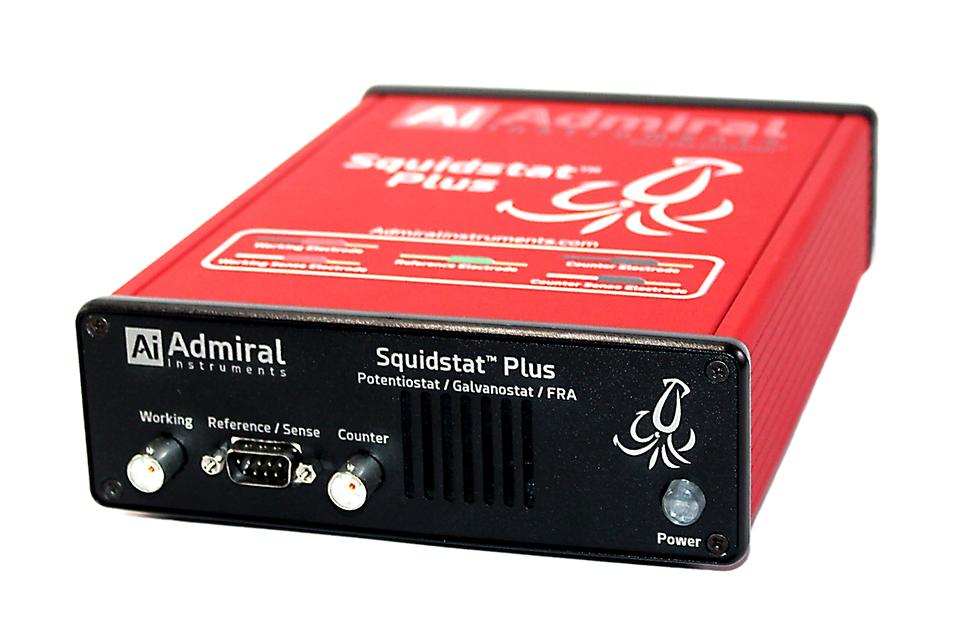
Single-channel potentiostat/galvanostat with FRA
-
Current range: 1 A max
-
Voltage scan range: 10 V
-
EIS frequency range: 10 Hz - 2 MHz
-
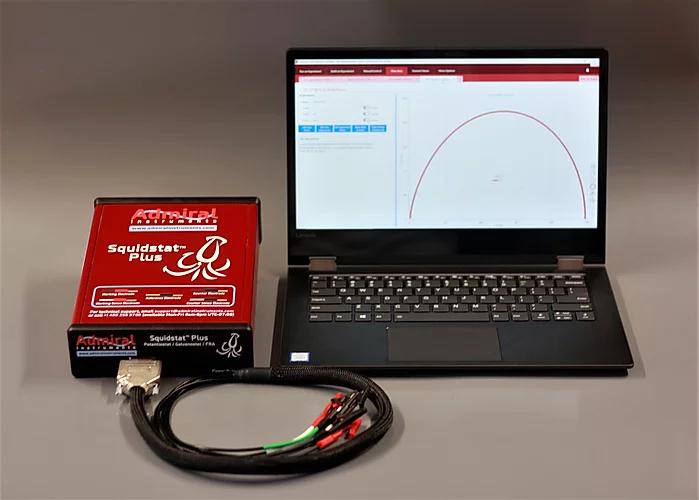
Compatible with Windows, MacOS, and Ubuntu via the Squidstat User Interface software and Application Programming Interface
-
Onboard memory (16 GB) automatically backs up all channel data for future recovery
-
Multiple units can run simultaneously with other Squidstat models
-
Made in USA
Advanced Electrochemical AnalysisThe Squidstat Plus Potentiostat offers precise measurement capabilities for applications like battery research, corrosion studies, and fundamental electrochemical investigations. Its wide current range and high accuracy provide reliable data, making it an essential tool for any modern electrochemistry laboratory.
Seamless Operation and ConnectivityFeaturing a convenient USB 2.0 interface and dedicated Squidstat PC software, users can easily control the instrument, acquire data at rates up to 100 kHz, and analyze results directly on a Windows computer. This setup ensures efficient workflow integration and hassle-free data management.
Robust Design and VersatilityDesigned with high-grade plastics and metal for durability, the Squidstat Plus boasts a compact rectangular build. It accommodates both 2- and 3-electrode experimental setups and operates reliably in environments from 0 to 40C, making it suitable for diverse laboratory settings.
FAQ's of Squidstat Plus Potentiostat:
Q: How do I set up the Squidstat Plus Potentiostat for my first experiment?
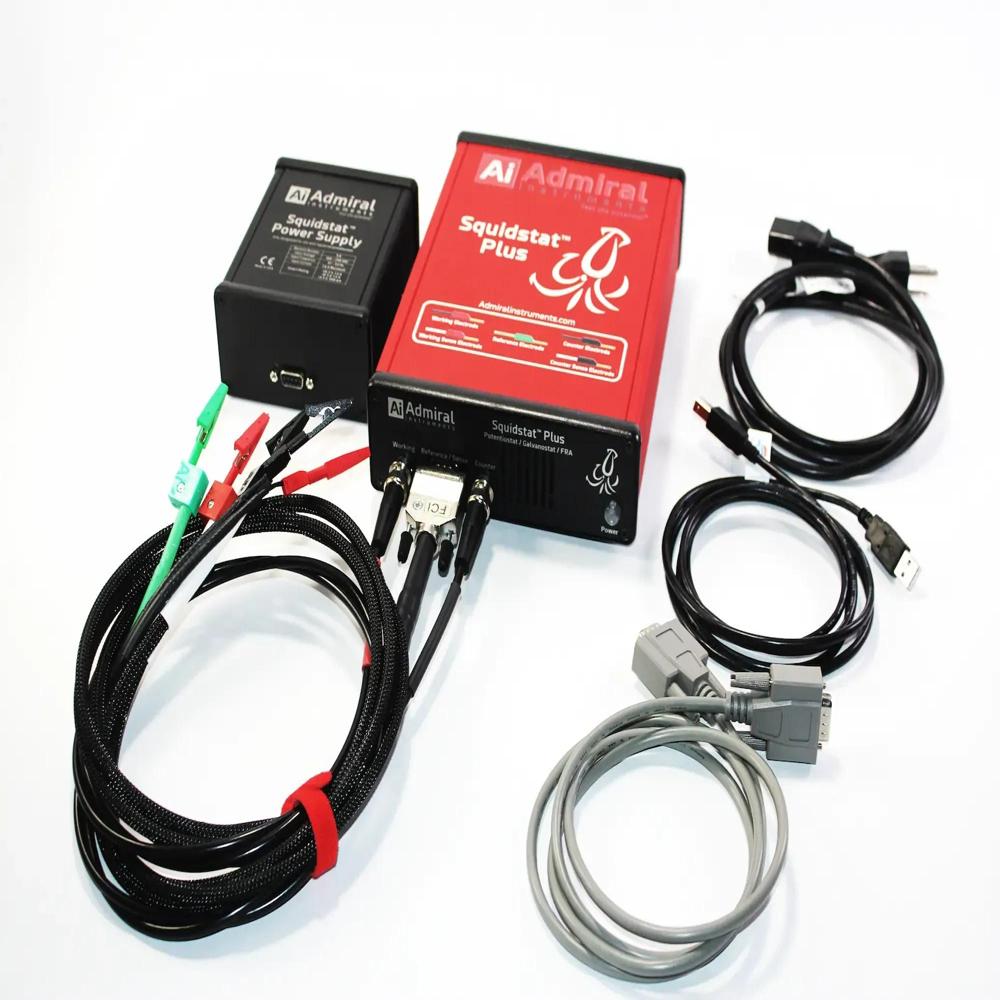
A: To set up the Squidstat Plus, connect it to your PC using the provided USB 2.0 cable, install the Squidstat PC software, and connect your compatible 2- or 3-electrode configuration. Then, follow the software prompts to initialize and configure your experiment.
Q: What types of experiments is the Squidstat Plus Potentiostat best suited for?
A: The device is suitable for electrochemical analysis, battery testing, and corrosion studies, thanks to its broad current range and high input impedance. Its versatile electrode compatibility and multi-mode operation make it ideal for research and industrial applications.
Q: When should I use the different electrode configurations with this potentiostat?
A: Use the 2-electrode setup for basic measurements or when a reference electrode isn't required. Choose the 3-electrode configuration for more precise control and analysis, especially in research or quantitative studies requiring a stable reference potential.
Q: Where can the Squidstat Plus Potentiostat be installed, and what are its power requirements?
A: Its compact, benchtop design allows installation in any standard laboratory environment with temperatures between 0 and 40C. It operates using a universal 100-240V AC power supply, making it adaptable to worldwide lab infrastructures.
Q: What is the data acquisition rate and how does it benefit my experiments?
A: The Squidstat Plus can acquire data at rates up to 100 kHz, enabling it to capture even brief electrochemical events. This rapid acquisition is excellent for experiments where time resolution is critical, enhancing the reliability and detail of your measurements.
Q: How does the computer-controlled operation improve user workflow?
A: Controlling the potentiostat via Squidstat PC software simplifies experiment setup, data logging, and analysis. This integration streamlines workflows, reduces manual errors, and allows users to efficiently store and review results on a Windows-based system.
 Send Inquiry



 Send Inquiry

 Send Inquiry
 English
 Spanish
 French
 German
 Italian
 Chinese (Simplified)
 Japanese
 Korean
 Arabic
 Portuguese